


What is vNOTES?
What if you could have less pain, a faster recovery and no scars?
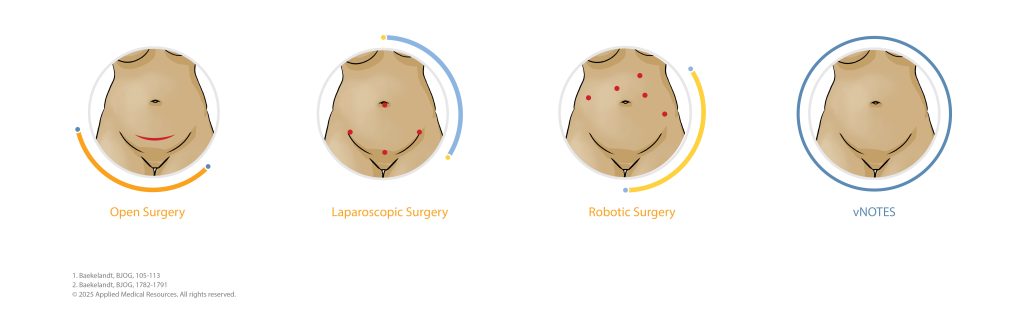
vNOTES (vaginal natural orifice transluminal endoscopic surgery) is an advanced minimally invasive gynecologic procedure using the vagina as a surgical access route. Because the surgery is performed through the vagina, there’s no need for abdominal cuts.
In the vNOTES procedure, your doctor uses specialized instruments inserted through the vagina instead of creating visible abdominal incisions in the body. This allows your doctor to gain access to the uterus and/or fallopian tubes and ovaries without any visible scarring.
Any patient for whom gynecological surgery has been recommended can request a consult. These may involve abnormal/heavy periods, irregular periods, pelvic pain, ovarian cysts and those desiring permanent sterility. Call 970.625.1100 to schedule an appointment with one of our vNOTE providers.
What surgeries are offered using vNOTES?
We treat a wide range of gynecologic conditions using vNOTES. Some of the most common procedures include:
- Hysterectomy (removal of the uterus)
- Salpingectomy (removal of fallopian tubes)
- Oophorectomy (removal of ovaries)
- Ovarian cystectomy (removal of ovarian cysts)
- Permanent sterilization (tubal ligation)
What are the proven benefits of vNOTES?
vNOTES has been shown to provide the following benefits to patients compared to the laparoscopic approach:
- Shorter hospital stay
- Less postoperative pain
- Less pain medication
- Faster recovery time
Baekelandt J, et al. Hysterectomy by Transvaginal Natural Orifice Transluminal Endoscopic Surgery versus laparoscopy as a day-care procedure: a randomized controlled trial. BJOG 2019 Jan;126(1):105-113.
Meet Our vNotes Team
Mary Glode, MD, FACOG
Phone: 970-625-1100
Gynecology
Dr. Mary Glode is a board-certified gynecologist dedicated to providing comprehensive, patient-centered care in women’s health. Originally from Wyoming, she earned her undergraduate degree from the University of Notre Dame and completed medical school at Creighton University in Omaha. She then pursued her internship and residency in Obstetrics and Gynecology at the University of Missouri, Kansas City.
Drawn back because of her passion for the mountains, Dr. Glode has been serving patients in the Roaring Fork and Colorado River Valleys since 2001. Her practice offers the full scope of gynecology, with particular interests in women’s health surgery and bioidentical hormone replacement therapy (HRT).
Dr. Glode is focused on building lasting partnerships with her patients, with a collaborative approach to achieving optimal health and wellness. She places a high value on the relationships she has developed over time and finds the most fulfillment in supporting her patients throughout their stages of life.
She is a Fellow of the American College of Obstetricians and Gynecologists (ACOG) and is board certified by the American Board of Obstetrics and Gynecology (ABOG).
Outside of her practice, Dr. Glode enjoys traveling and has visited more than 70 countries, with a goal of reaching 100. She lives in Glenwood Springs with her husband, Kelly, along with their Mastiff, Sasha, and three cats.
Mary Glode, MD, FACOG
Gynecology Dr. Mary Glode is a board-certified gynecologist dedicated to…
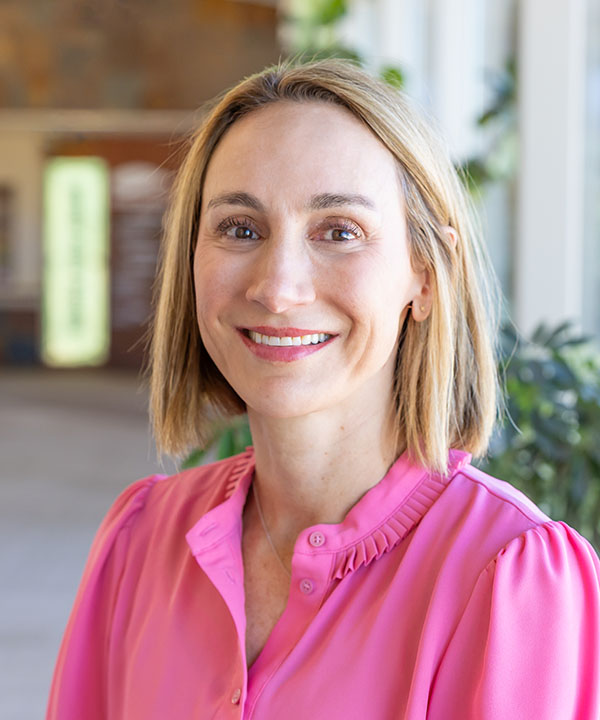
Virginia “Ginny” Weathers, MD FACOG
Phone: 970-625-1100
Gynecology
Dr. Weathers attended Louisiana State University in Baton Rouge, LA and then completed medical school in 2008, also at Louisiana State University Health Sciences Center. Dr. Weathers completed her Obstetrics and Gynecology residency at Parkland Memorial Hospital UT Southwestern in Dallas, TX and became a Fellow of the American Board of Obstetrics and Gynecology in 2014. Dr. Weathers practiced as an OB/GYN in Houston until 2018. Dr. Weathers offers a full scope of gynecological services including surgery, adolescent gynecology, contraception, endometriosis, menstrual problems, amongst many other conditions.
Dr. Weathers credits her success with her patients on practicing evidence based medicine and, being a great listener. “I try to understand the whole patient and ask the right questions. Being a physician encompasses so much more than treating symptoms. I also enjoy working with patients on a healthy lifestyle, citing even small, simple changes can make a huge difference in overall health.”
Dr. Weathers is certified by The American Board of Obstetrics and Gynecology and has a practice focus designation in pediatric and adolescent gynecology.
She lives in Carbondale with her husband, Will, two daughters and their dog Tucker. In her spare time she loves hanging out with her family and friends, biking around town, live music and indulging in good food.
Virginia “Ginny” Weathers, MD FACOG
Gynecology Dr. Weathers attended Louisiana State University in Baton Rouge,…
vNOTES FAQ
A hysterectomy is a surgical procedure to remove the uterus. The uterus is the organ responsible for menstrual periods and where a pregnancy develops.
A hysterectomy removes the uterus only. Depending on your medical needs, your surgeon may also discuss removing the fallopian tubes and/or ovaries.
Common reasons for a hysterectomy include:
- Heavy or abnormal menstrual bleeding
- Painful periods
- Endometriosis
- Uterine fibroids
- Certain abnormal Pap smear findings
- Other gynecologic conditions affecting quality of life
Your provider will discuss your specific diagnosis and treatment options to determine whether a hysterectomy is appropriate.
A tubal ligation is a form of permanent birth control. Today, rather than simply “tying” the fallopian tubes, surgeons typically remove the tubes entirely.
Removing the fallopian tubes:
- Prevents natural pregnancy
- Provides permanent contraception
- May reduce the risk of ovarian cancer
vNOTES stands for Vaginal Natural Orifice Transluminal Endoscopic Surgery.
This advanced minimally invasive technique allows surgeons to perform procedures such as hysterectomies and fallopian tube removal through the vagina rather than through abdominal incisions.
Using specialized instruments and a camera, surgeons can access the pelvic organs without creating visible abdominal scars.
Traditional hysterectomy procedures may involve:
- A large abdominal incision
- Several small laparoscopic incisions
- Robotic-assisted abdominal incisions
With vNOTES:
- No abdominal incisions are required
- There are no visible scars
- Surgical access is gained through the vaginal canal
- Recovery may be faster
- Patients often experience less postoperative discomfort
Potential benefits include:
- No visible abdominal scars
- Less postoperative pain
- Reduced need for narcotic pain medications
- Faster recovery
- Earlier return to normal activities
- Shorter hospital stays
- In many cases, same-day discharge
Many patients are able to manage discomfort with over-the-counter medications such as Tylenol® and ibuprofen.
Most women who require a hysterectomy or fallopian tube removal may be candidates for vNOTES.
Eligibility depends on several factors, including:
- Your anatomy
- Prior surgical history
- The reason for surgery
- The size of the uterus
- Any underlying medical conditions
A consultation and examination with your gynecologic surgeon will determine the best approach for your situation.
While many patients qualify, vNOTES may not be appropriate for everyone.
Patients who may not be candidates include those with:
- Certain gynecologic cancers
- Extensive pelvic scarring
- Prior rectal surgery
- Specific anatomic considerations
Your surgeon will review your medical history and discuss the safest surgical options for you.
Recovery varies from person to person, but most patients experience less discomfort than with traditional abdominal surgery.
Immediately after surgery:
- Walking is encouraged
- Heavy lifting should be avoided
- Showers are allowed
- Baths, pools, and hot tubs should be avoided initially
Most patients report only mild discomfort after the first several days.
Most patients experience less pain than with traditional abdominal surgery because there are no abdominal incisions.
Instead of incision-related pain, patients typically describe temporary cramping or pelvic discomfort that improves as healing progresses.
No.
Patients may:
- Request a referral from their primary care provider, or
- Contact Grand River Health Women’s Health directly to schedule a consultation
A consultation allows you to discuss your symptoms, treatment options, and whether vNOTES may be right for you.


