
Measles

Measles is a highly contagious disease caused by a virus. It spreads easily when an infected person coughs or sneezes, releasing tiny droplets into the air that others can breathe in.
Symptoms of Measles:
- Fever: A high temperature.
- Cough and Runny Nose: Similar to a cold.
- Red, Watery Eyes: Eyes may appear red and feel sensitive to light.
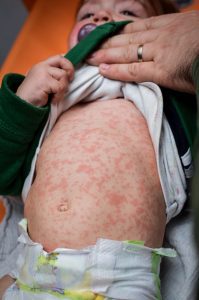
- Rash: After a few days, a red, blotchy rash appears, usually starting on the face and then spreading to the rest of the body.
 Why Measles is Serious:
Measles can lead to serious health problems, especially in young children. Complications can include ear infections, lung infections (pneumonia), and, in rare cases, swelling of the brain (encephalitis).
Current Outbreak:
As of April 2025, there has been a significant increase in measles cases in the United States. Over 480 cases have been reported across 19 states, with Texas accounting for the majority. Most infections are among unvaccinated children under 19 years old.
Prevention:
The best way to protect against measles is through vaccination. The measles vaccine is often given as part of the MMR vaccine, which also protects against mumps and rubella. Children typically receive two doses: the first at 12 to 15 months old and the second at 4 to 6 years old. This vaccine is very effective and has greatly reduced measles cases over the years.
What You Can Do:
- Vaccination: Ensure you and your family are up to date with vaccinations.
- Stay Informed: Be aware of measles symptoms and outbreaks in your area.
- Practice Good Hygiene: Wash hands regularly and avoid close contact with sick individuals.

Dr. Kelli Konst-Swiot